
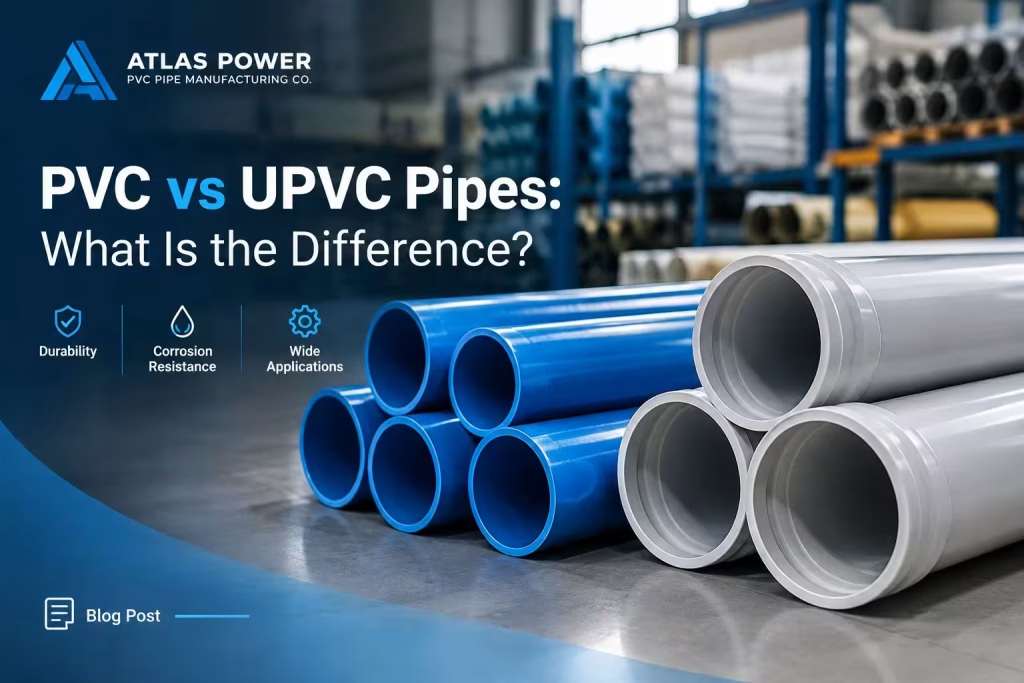
PVC vs UPVC pipes are widely used in plumbing, construction, drainage, and infrastructure projects. Although both materials are made from polyvinyl chloride, they have different properties and applications. Understanding these differences can help you choose the right piping solution for your project.
At Atlas Power PVC Pipe Manufacturing Co., we supply PVC and UPVC piping products and fittings for construction and infrastructure needs in Afghanistan.
What Are PVC Pipes?
PVC stands for Polyvinyl Chloride, a widely used plastic material valued for its versatility, corrosion resistance, and relatively low maintenance requirements.
PVC pipes are used in various applications, including drainage, electrical conduit systems, and other piping installations, depending on their design and technical specifications.
Benefits of PVC Pipes
- Corrosion resistance: PVC does not rust like conventional metal pipes.
- Lightweight construction: PVC pipes are generally easier to transport and handle than many metal alternatives.
- Cost efficiency: They can be an economical option for suitable piping applications.
- Versatility: PVC products are available in different sizes and designs.
- Low maintenance: Properly selected and installed PVC piping can require relatively little routine maintenance.
The performance of a PVC pipe depends on its formulation, dimensions, operating conditions, and intended application.
What Are UPVC Pipes?
UPVC stands for Unplasticized Polyvinyl Chloride. It is a rigid form of PVC made without added plasticizers. UPVC pipes are commonly used in water supply, drainage, and other piping systems designed for their specific pressure and performance requirements.
Benefits of UPVC Pipes
- Rigidity: UPVC pipes maintain their shape under suitable operating conditions.
- Corrosion resistance: They resist rust and many forms of chemical corrosion.
- Smooth internal surface: A smooth bore can help reduce friction during water flow.
- Durability: Correctly specified and installed UPVC pipes can provide long-term service.
- Practical installation: Their relatively low weight can simplify transportation and handling.
Choosing a UPVC pipe requires checking its pressure rating, dimensions, applicable standards, and suitability for the intended use.
PVC vs UPVC Pipes: Main Differences
The main distinction between PVC and UPVC is the presence or absence of added plasticizers. UPVC is generally rigid, while PVC products can have different levels of flexibility depending on their formulation.
However, material type alone does not determine whether a pipe is suitable for a particular project.
| Feature | PVC Pipes | UPVC Pipes |
|---|---|---|
| Material | Polyvinyl Chloride | Unplasticized Polyvinyl Chloride |
| Flexibility | Depends on formulation | Generally rigid |
| Common applications | Drainage, conduits, and specified piping systems | Water supply, drainage, and specified pressure systems |
| Corrosion resistance | Good | Good |
| Maintenance | Generally low | Generally low |
| Selection factors | Application and product specifications | Application, pressure rating, and product specifications |
Both materials can perform reliably when the pipe is designed for the intended application and installed according to the manufacturer’s instructions.
Common Applications of PVC and UPVC Pipes
PVC and UPVC pipes are used in residential, commercial, agricultural, and industrial projects. The appropriate product depends on the requirements of each installation.
1. Water Supply Systems
Pipes specifically manufactured and rated for potable water or other water supply applications can be used in suitable distribution systems. Always verify the product’s intended use and applicable approvals before installation.
2. Drainage and Sewerage
PVC and UPVC piping products are widely used in drainage and sewerage systems. Correct pipe dimensions, jointing methods, and installation practices are important for reliable performance.
3. Electrical Conduit Systems
Suitable PVC conduit pipes can help protect electrical cables in buildings and infrastructure projects. Conduit products should meet the relevant electrical installation requirements.
4. Agricultural Water Distribution
Appropriately rated piping systems can support irrigation and water distribution. Pressure requirements, exposure conditions, and the type of transported water should be considered before choosing a product.
5. Residential and Commercial Construction
PVC and UPVC pipes and fittings are important components of many plumbing and building infrastructure systems. Selecting compatible pipes and fittings helps create a reliable installation.
How to Choose the Right PVC or UPVC Pipe
Before purchasing pipes for a construction or infrastructure project, consider the following factors.
1. Identify the Application
Determine whether the pipe will be used for water supply, drainage, sewerage, irrigation, or electrical protection. Different applications require different product specifications.
2. Check the Pressure Rating
For pressure piping, verify the rated working pressure and operating conditions. Do not select a pipe based only on its external appearance or diameter.
3. Confirm Pipe Dimensions
Check the nominal diameter, wall thickness, connection type, and compatibility with the fittings required for your installation.
4. Review Applicable Standards
Confirm which technical standards apply to your project and verify that the selected product meets the required specifications. For relevant technical requirements, consult the applicable standards and documentation published by organizations such as ASTM International.
5. Consider Installation Conditions
Temperature, sunlight exposure, soil conditions, chemical contact, and installation methods can affect the suitability and service life of a piping system.
6. Choose a Reliable Manufacturer
Look for clear product specifications, consistent manufacturing quality, appropriate technical documentation, and support for your project requirements.
When comparing PVC vs UPVC pipes, consider the intended application, pressure requirements, applicable standards, and installation conditions before making your decision.
Taking these factors into account can help you choose a piping system that meets your project’s needs.
Why Choose Atlas Power?
Atlas Power PVC Pipe Manufacturing Co. supplies PVC and UPVC pipes and fittings for construction and infrastructure applications in Afghanistan.
Our product range supports a variety of project requirements, including suitable piping solutions for water distribution, drainage, sewerage, and electrical conduit applications.
We aim to support contractors, distributors, builders, and engineering teams by providing piping products suited to their project specifications.
If you are planning a residential, commercial, or infrastructure project, our team can help you explore the available product options and identify the relevant specifications.
Learn more about our company, manufacturing activities, and approach on our About Us page.
Frequently Asked Questions
Are PVC and UPVC pipes the same?
No. Both are based on polyvinyl chloride, but UPVC is manufactured without added plasticizers and is generally rigid. Their applications depend on the specific product design.
Which is better for water supply: PVC or UPVC?
Neither is automatically better for every situation. Choose a pipe specifically designed and rated for the intended water supply application, and check its pressure rating and applicable standards.
Can PVC and UPVC pipes be used for drainage?
Yes, suitable PVC and UPVC products are commonly used for drainage. The selected pipe must meet the project’s dimensional, installation, and performance requirements.
How do I choose the correct pipe size?
Consider the required flow rate, system pressure, connection requirements, installation conditions, and the technical specifications provided by the manufacturer or project engineer.
Conclusion
PVC vs UPVC pipes differ mainly in their formulation, rigidity, and intended product applications. Both can offer practical benefits, including corrosion resistance and relatively low maintenance, when correctly selected and installed.
Understanding PVC vs UPVC pipes helps project owners and contractors compare available options and select a suitable piping solution for their needs. Before choosing a piping system, review the intended application, pressure rating, dimensions, and relevant standards.
Looking for PVC and UPVC pipes for your project in Afghanistan?
Contact Atlas Power to learn more about our piping products and fittings and discuss the requirements of your project.
Contact Atlas Power for Product Information and Inquiries.